
Virgin casino Plinko
Introduction
Plinko has become one of the most talked-about instant-win formats in modern online gambling because it strips the experience back to something almost deceptively simple: you choose a stake, set a risk level, drop a ball, and watch it bounce through a field of pins until it lands in a payout slot. On the Virgin casino Plinko page, that simplicity is exactly what catches the eye first. There are no reels, no paylines, no bonus rounds to decode, and no dense paytable to study for ten minutes before the first round.
But the reason players keep returning to Plinko is not just that it is easy to understand. In practice, it creates a very specific kind of tension. The screen looks clean and straightforward, yet each drop carries a highly visible path of randomness. You are not just waiting for a result; you are watching uncertainty unfold in real time. That difference matters. It changes how the session feels, how quickly decisions are made, and how sharply players notice swings in balance.
From my perspective, that is where Plinko deserves a closer look. It is often presented as a light, accessible casino game, and in one sense that is true. Still, the actual playing experience can vary dramatically depending on settings such as risk level and board layout. A low-risk session can feel steady and controlled. A high-risk session can become volatile very quickly, with long stretches of modest returns punctuated by rare but much larger multipliers. Anyone considering Virgin casino Plinko should understand that contrast before pressing start.
What Virgin casino Plinko is and why it draws so much attention
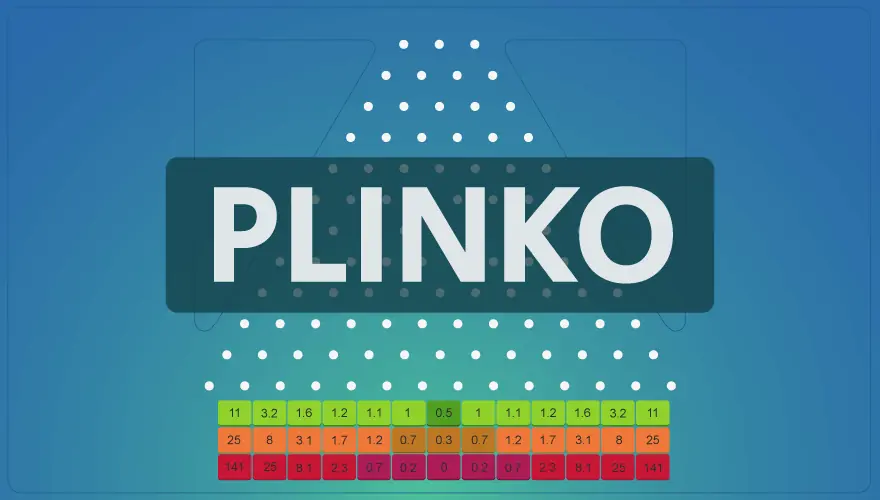
At its core, Plinko is a probability-based drop game. A ball falls from the top of the board, hits a series of pegs, and is deflected left or right until it reaches one of several payout zones at the bottom. Each zone is tied to a multiplier. The closer the ball lands to the centre, the more common the result usually is. The outer edges often carry the highest multipliers, but they are reached less often.
This format stands out because it translates mathematical variance into something visual. In a slot, the random number generator determines the outcome behind the scenes and the reels reveal it. In Plinko, the random result is still governed by software logic, but the journey to the final multiplier is part of the appeal. Players see the ball ricochet, hesitate, change direction, and drift toward either an ordinary return or a rare top-end hit. That visible path gives the game a stronger sense of suspense than many equally fast casino products.
Another reason Plinko attracts attention is that it feels approachable even to players who do not normally spend much time on slots or compare Virgin Casino blackjack before signing up. The interface is usually minimal, the rules are easy to absorb, and the outcome of each round is immediate. There is very little friction between opening the page and understanding what to do next. For many users, especially those who prefer short sessions or mobile-friendly formats, that low barrier to entry is a real advantage.
There is also a psychological factor that should not be ignored. Plinko creates the impression that every drop is a near miss or a near success because the ball visibly passes through multiple possible paths. That can make the game feel more interactive than it really is. It is still a chance-based product, but the animation gives each result a story. That is one of the format’s smartest design choices.
How the Plinko mechanic actually works in practice
To understand Virgin casino Plinko properly, it helps to separate what the player sees from what the player controls. Visually, the experience is simple: a ball is released from the top and bounces down the board. On the player side, the main decisions usually involve stake size, number of rows if available, and the chosen risk level. Those settings shape the distribution of outcomes far more than the animation itself.
The board is built around repeated binary deflections. Each time the ball hits a peg, it shifts left or right. Over a large sample, this creates a distribution where central landing zones are hit more often than the extreme edges. That is why the middle of the board usually contains lower multipliers, while the far-left and far-right slots can carry much larger numbers. The game is not “aiming” in any manual sense. The path is generated by chance, and the board is designed so that common outcomes cluster in the middle.
Risk settings are where the experience changes most noticeably. A lower-risk mode generally compresses the payout structure. That means more frequent modest returns and fewer dramatic spikes. A higher-risk mode stretches the board economics in the opposite direction: many more low or losing outcomes, but with a chance of reaching significantly larger multipliers on the edge.
That distinction is not cosmetic. It determines the entire feel of the session. I often describe Plinko as a game with one visual identity and several mathematical personalities. On screen, the board may look almost the same from one mode to another. In reality, the balance behaviour can be completely different.
| Core element | What it means in the interface | What it means for the player |
|---|---|---|
| Stake | The amount used for each drop | Directly affects how quickly the bankroll rises or falls |
| Risk level | Low, medium, or high distribution model | Changes the balance between frequent small returns and rarer large multipliers |
| Rows | The height or depth of the board | Can influence outcome spread and the shape of the multiplier table |
| Multiplier slots | Payout values at the bottom of the board | Show where ordinary and rare results are concentrated |
One practical point matters here: players sometimes assume that because they can see the path, the game is more controllable than a slot. It is not. The visible movement does not create a skill layer in the usual sense. Your decisions affect exposure through settings, not through timing or precision. That is important to understand early, because Plinko can otherwise give a false sense of influence.
Why the game feels engaging and how its rhythm develops during a session
The rhythm of Plinko is one of its strongest design features. Each round resolves quickly, but not instantly. The ball takes just long enough to fall that anticipation builds naturally. In a slot, spins can blur together after a while, especially when autoplay is active. In Plinko, even rapid rounds have a visible arc from release to landing, and that keeps the eye involved.
The interplay between brisk play and a brief dramatic pause after each ball lands keeps the session moving without letting it blur into a mindless click-through. Each drop resolves with a visible payout event, which gives the round a clear beginning and end, so the tension spikes and releases in quick, repeatable cycles. Most titles in this bracket settle into a comfortable cadence of roughly one throw every few seconds, and Virgin Casino's Plinko stays within that familiar range while adding just enough visual feedback to make the outcome feel earned rather than random. That combination of fast input and delayed reveal is what produces the oddly soothing yet sharp emotional rhythm players keep coming back to.
What keeps the format interesting is the contrast between expectation and result. Most drops tend to settle into modest areas of the board, especially on lower-risk settings. Then, occasionally, the ball drifts further than expected and lands in a stronger multiplier zone. Those isolated moments carry a lot of weight because the player has watched the path develop second by second. The reveal is not hidden behind spinning reels; it is staged in plain sight.
A memorable detail about Plinko is that it often makes short losing stretches feel longer than they actually are. Because you observe every bounce, the brain processes each round as an event rather than a number on a results list. That can intensify both frustration and excitement. It is one of the reasons bankroll management matters more here than some newcomers expect.
How risky Plinko can be and who is likely to enjoy it
Plinko can be relatively mild or distinctly aggressive depending on configuration. It is not accurate to label the format as inherently safe or inherently extreme without looking at the chosen settings. The same board concept can support very different payout behaviour.
In low-risk mode, the game may suit players who prefer more stable sessions, smaller fluctuations, and frequent partial returns. This does not remove the house edge, and it does not guarantee slow losses, but it usually creates a smoother balance curve. You are less likely to see dramatic spikes, either positive or negative, over a short sample.
In medium-risk mode, Plinko often starts to resemble a compromise between consistency and upside. The session can still deliver enough regular feedback to stay engaging, but the possibility of stronger multipliers becomes more relevant. For many players, this is the setting where the format feels most balanced.
High-risk mode is different. Here, the game can become unforgiving. Long sequences of weak landings are entirely possible, and the attraction lies in the chance of hitting a standout multiplier that changes the session picture. This is where Plinko appeals to players who actively seek volatility and are comfortable with dry spells. It is also where the game can burn through a bankroll faster than its clean interface suggests.
Plinko may suit you if: you enjoy quick rounds, visible randomness, simple controls, and a format where settings noticeably alter the feel of play.
It may not suit you if: you want story-driven features, strategic depth, themed presentation, or a more layered progression system like the one found in many video slots.
One of the most useful ways to think about Plinko is this: it is less about sustained entertainment architecture and more about repeated moments of probability. If you like concentrated bursts of uncertainty, it can be compelling. If you need evolving features and long-form pacing, it may feel thin after a while.
What players should understand about probabilities, outcomes, and session behaviour
Before trying Virgin casino Plinko, it is worth being realistic about how probabilities work. The board may suggest that every slot at the bottom is simply one possible destination among many, but those destinations are not equally likely. The centre is usually reached far more often than the edges. That imbalance is the foundation of the whole payout model.
Higher multipliers exist because they are harder to hit. Lower multipliers appear more often because they support the overall return structure. This sounds obvious, but in practice many players emotionally overvalue the rare edge outcomes because they are visually dramatic. A few near-edge bounces can create the feeling that a big result is “close.” Mathematically, each drop remains independent. The board does not become more generous because the previous sequence looked unlucky.
That is another point where Plinko differs from how some users intuitively read it. The visible path can tempt players to search for streak logic or directional patterns. They may feel that the ball is favouring one side, or that a top multiplier is due after repeated central landings. Those interpretations are natural, but they are not reliable decision tools. The outcome distribution is defined by the game model, not by short-term visual narratives.
In practical terms, this means players should think in session ranges rather than individual dramatic moments. A single strong multiplier can reshape results, especially in high-risk mode. At the same time, many sessions will be defined by ordinary landings. The visible suspense of each drop should not obscure the fact that Plinko is still a numbers game built on repeated trials.
| Session factor | Lower-risk play | Higher-risk play |
|---|---|---|
| Typical balance movement | Smoother, with smaller swings | Sharper, with longer dry patches and occasional spikes |
| Frequency of modest returns | Usually higher | Usually lower |
| Chance of standout multiplier | More limited | More relevant, but still uncommon |
| Bankroll pressure | Often easier to manage | Can escalate quickly |
A useful observation here is that Plinko often teaches discipline faster than slots do. Because the rounds are short and the variance is visible, players notice very quickly whether their chosen stake actually fits their balance. The game does not hide poor stake selection for long.
How Plinko differs from slots and other common casino formats
The clearest difference between Plinko and classic slots is structural. Slots are built around reels, symbol combinations, paylines or ways systems, and often layered bonus features. Plinko removes almost all of that. There are no expanding wilds, no free spins, no cascading symbols, and usually no long feature cycle to chase. The appeal is concentrated into a single repeated action with adjustable parameters.
That makes the game easier to read but also narrower in scope. A slot can create entertainment through theme, soundtrack, feature pacing, and changing screen states. Plinko relies on probability, motion, and clean visual tension. It is closer to an instant result product than to a narrative slot experience.
Compared with roulette checks before using Virgin Casino, Plinko shares the appeal of simple setup and fast resolution, but the emotional texture is different. Roulette gives a hard stop when the ball lands. Plinko gives a staggered descent that stretches anticipation. Compared with crash games, Plinko is less about nerve and timing, and more about accepting a pre-set chance model. Compared with blackjack, it offers no decision-making depth once the settings are chosen.
That is why I would not describe Plinko as a substitute for every other casino game. It occupies a specific lane. It is ideal for players who want directness, speed, and visible randomness without learning complex rules. It is less suitable for those who want strategic input or feature-rich progression.
Practical strengths and limitations of the format
Plinko has several genuine strengths, and they are not hard to identify once you spend time with the format. First, it is extremely accessible. A new player can understand the basic premise in seconds. Second, it gives immediate feedback. Third, the risk settings create meaningful variation without cluttering the interface. Those are not minor benefits; they are the reason the format has become so visible across modern casino libraries.
Another strength is transparency of feel. I do not mean transparency in the mathematical sense alone, but in the user experience. Plinko makes its tension obvious. You can see the path, understand the stakes, and sense the difference between a conservative and aggressive setup. Many slots hide their true volatility behind attractive themes and occasional small hits. Plinko is more honest emotionally. If the session is swinging, you feel it straight away.
That said, the format has real limitations. One is repetition. Because the core action never changes, some players will find that the novelty fades quickly. Another is the illusion of agency. The visible bounce pattern can make the game feel more interactive than it is, which may lead some users to overestimate control. A third limitation is that high-risk settings can create harsh balance drops in a very short time, especially if the stake is set too high.
There is also a subtle drawback that does not get discussed enough: Plinko can compress emotional highs and lows into a small time window. That makes it exciting, but it can also make poor decisions happen faster. A player who chases a rare multiplier after a frustrating run may increase stakes without noticing how quickly exposure is growing. The game’s clean design does not automatically mean gentle pacing.
What to check before starting a Virgin casino Plinko session
Before launching a session, I recommend focusing on a few practical points rather than diving in purely because the interface looks simple. Plinko rewards clarity about what kind of experience you actually want.
Check the risk setting first. This is the single most important choice because it shapes the entire outcome profile. Do not treat it as a minor preference toggle. If bonuses are what you care about, welcome bonus guide breaks down every offer currently running.
Match the stake to the likely session length. Fast rounds can drain a balance faster than expected, particularly in high-risk mode.
Look at the multiplier spread. The headline top number is not the whole story. The distribution of lower and mid-range outcomes matters more for most sessions.
Use demo mode if available. This helps you understand the rhythm and variance without attaching money to first impressions.
Decide in advance what success looks like. For some players, that means a short, controlled session. For others, it means taking a shot at larger multipliers with a fixed loss limit. Players who value quick withdrawals will find real timings in sign up bonus review.
This is also the point where expectations should be reset. Virgin casino Plinko is not a feature hunt. It is not the kind of title where patience unlocks a bonus round that transforms the session. The main event is the drop itself, repeated under different mathematical conditions. If that core loop feels appealing, the game makes sense. If it does not, no amount of branding or presentation will change the underlying format.
Final verdict on Virgin casino Plinko
Virgin casino Plinko offers a focused, modern gambling format built around visible randomness, adjustable risk, and very fast decision cycles. Its biggest strength is clarity. You can understand the rules immediately, see the result unfold in front of you, and feel the impact of different settings without digging through a complicated paytable. For players who value directness and short, high-attention rounds, that is a strong proposition. Before you make a deposit, it is worth reading Virgin Casino bingo guide for players comparing casino options for the fee and speed details.
The game is at its best when approached with realistic expectations. Plinko looks simple because it is simple on the surface, but the session experience can shift dramatically depending on risk level and stake choice. Low-risk play can feel measured and steady. High-risk play can become severe, with long quiet stretches followed by occasional standout hits. That contrast is exactly what makes the format compelling for some players and frustrating for others.
If you enjoy classic slots mainly for bonus features, themed presentation, and layered progression, Plinko may feel too stripped back. If you prefer quick rounds, clean design, and a format where probability is felt almost physically through the movement on screen, it can be a very good fit. The key is to recognise that the bouncing ball is not just decoration. It is the visual face of a variance-driven system that can be mild or sharp depending on how you set it up.
My overall view is straightforward: Plinko is worth trying if you want a more transparent, fast-moving alternative to reels and paylines, but it demands discipline precisely because it looks so approachable. Its strengths are speed, accessibility, and immediate tension. Its weak points are repetition, limited depth, and the ease with which high-risk settings can turn a casual session into an expensive one. For the right player, that trade-off works. For the wrong one, the format can feel thin or punishing very quickly.
FAQ
How does Virgin Plinko work when the ball drops?
A ball is released from the top and bounces off pegs as it travels down. The final slot determines the multiplier outcome shown after the drop.
What should be checked before starting a real-money Plinko round?
Confirm the wager amount and make sure the session is in real-money mode rather than demo mode. It also helps to review any on-screen limit or restriction indicators before launching the ball.
Can Plinko be played for free in demo mode?
Demo mode is available so the mechanics can be tested without using real funds. The round uses the same basic ball-drop rules and multiplier results.
What happens if a Plinko bonus code is entered during game launch?
Plinko accepts bonus codes only if that code is valid for the casino promotion and the current account status. If a code is rejected, the game will continue as normal, but the promotion will not be applied.
What risk level does Plinko usually show compared with lower-volatility casino games?
Plinko outcomes can swing quickly because the ball’s path determines the multiplier. Higher variance game sessions may feel more unpredictable than slower, more steady formats.
Will Plinko load on mobile when using the casino mobile app?
Plinko is designed for mobile play and should open smoothly in the app’s game section. If the ball area does not render, switching network or restarting the app typically fixes the issue.
Does the game session allow multiple rapid drops, and are there any table limits to know?
Plinko uses table limits that may restrict wagering size or total stakes within the session. Any active restrictions are shown in the game interface, so the wager should be set within those limits.
If login is required, how should account access be handled before playing Plinko?
Sign in via the casino login screen before launching real-money play. If access is blocked, completing account verification steps in your account area can restore game availability.
What common mistake causes unexpected results when playing Plinko for real money?
Starting a round with the wrong wager amount is the most frequent issue. Another common slip is forgetting to switch from demo mode to real-money mode before pressing drop.
How does Plinko compare with live casino tables if a player wants a faster game loop?
Plinko is a quick round game that runs without a live dealer. Live table games rely on turn-taking and dealer pacing, while Plinko focuses on immediate ball-drop results.